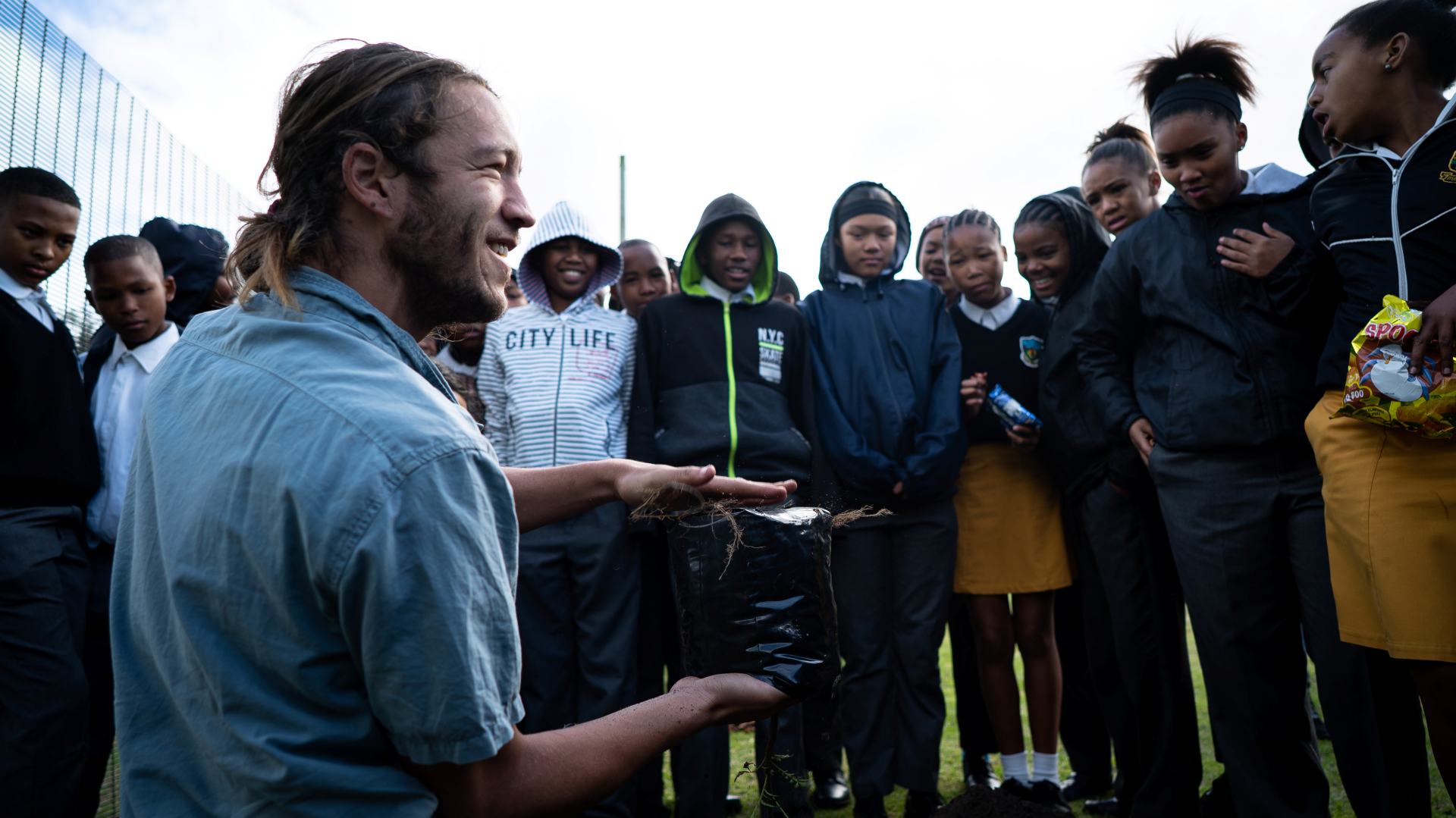
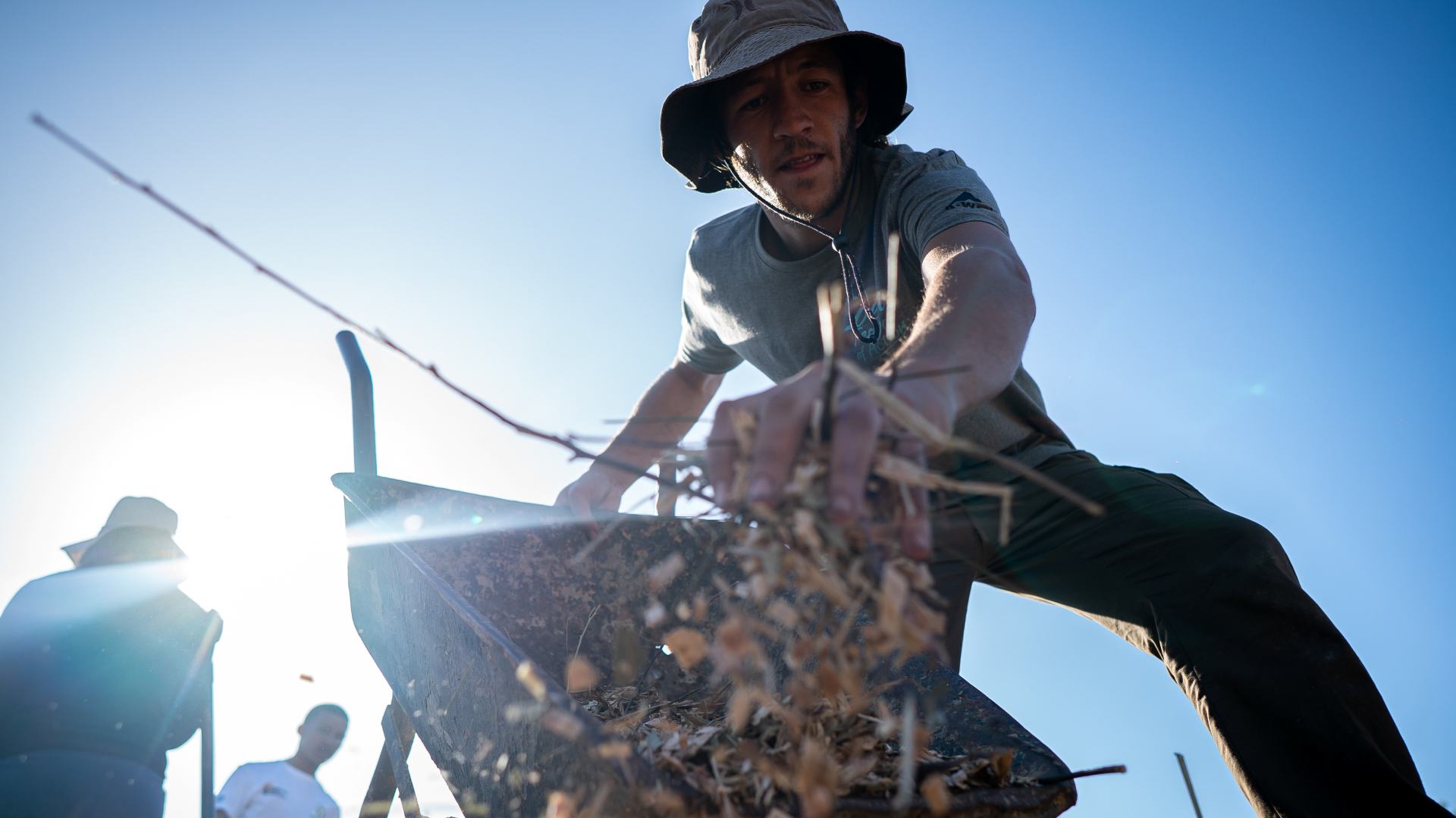
Tree Whisperer delivers integrated forest management across the Garden Route. We focus on three core areas: conserving and restoring indigenous ecosystems, creating responsible recreational access, and turning biomass from management activities into useful resources. Our approach is practical, science-based and tailored to the unique forests and landscapes of the region.
Invasive clearing & conservation

Protecting and restoring indigenous ecosystems
We help landowners and managers protect healthy indigenous systems while meeting their legal and environmental responsibilities.
- Forest management plans
- Alien invasive species management plans
- Alien invasive clearing and vegetation management
- Rehabilitation and restoration of indigenous landscapes
- Reforestation management and facilitation
- Protected and sensitive tree care (e.g. Milkwood, Yellowwood)
- Long-term monitoring of indigenous systems
Forest paths & recreation

Creating and maintaining access for people to enjoy the landscape
Well-planned access allows people to experience the forest responsibly while supporting ongoing management.
- Path creation and maintenance
- Species identification and tree tagging
- Dam access and maintenance
- Wildlife trailcam setup
- River access and river health
- Vehicle access and road maintenance
Wood chipping & resource utilization
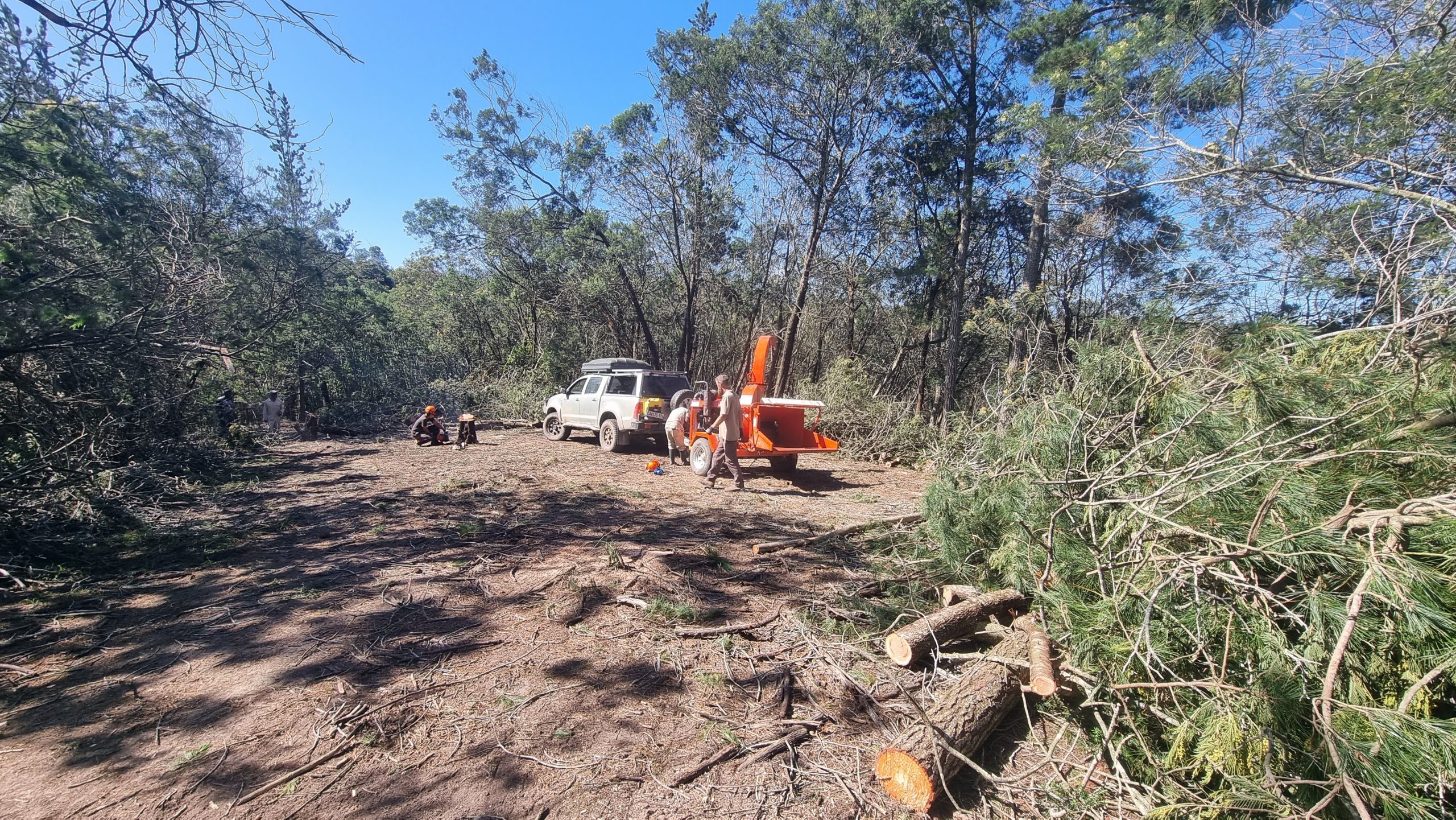
Turning management activities into useful resource
Clearing and management work generates valuable material. We help clients use it productively.
- Wood chipping and biomass management
- Firewood processing from alien clearing
- Biomass consultation and resource utilisation
- Contouring landscapes for efficient water management
FREQUENTLY ASKED QUESTIONS
Do you offer multi-year invasive alien management plans?
Yes. One-off clearing rarely delivers lasting results. We design and implement structured invasive alien management plans over 1-year, 3-year, 5-year and 10-year horizons. These plans typically include initial clearing, scheduled follow-up treatments, monitoring of regrowth, and progressive restoration of indigenous vegetation. Longer timeframes allow us to systematically reduce the seed bank, lower re-infestation risk, and support the recovery of the natural ecosystem.
What is invasive alien plant clearing?
The removal of unwanted exotic trees or vegetation that exert pressure on indigenous eco-systems. It involves felling, resource processing and follow ups. At Tree Whisperer invasive clearing also includes mapping, management, training and regrowth mitigation strategies. As an owner operated business, our focus is on good management & making life easier for our clients.
How do I know if I have invasive alien plants on my property?
Some governmental websites provide up to date lists of invasive species. If you are uncertain of your identification skills, you can get a tree specialist for a site assessment or quote to remove the invasive plants.
How much does invasive alien clearing cost?
Species, density, tree age, location amd processing method will determine the overall costs. It can range between R10k and R200k per hectare or R5k – R20k per day of production.
Why should I clear invasive alien plants from my property?
Invasive plants disrupt and outcompete indigenous vegetation, deplete nutrients and water in the soil, pose a fire risk, spread rapidly and encroach on farmland and natural areas. In South Africa landowners are legally expected to remove category 1a and category 1b invasive species (under the National Environmental Management: Biodiversity Act 10 of 2004 or NEMBA and its Alien and Invasive Species Regulations).
Will invasive alien plants grow back after clearing?
In most cases invasive vegetation will grow back. Seeds germinate, root suckers grow & cut stumps shoot. The cost effective solution to this is low impact follow ups to remove regrowth for a set amount of time per species
What happens to the land after invasive alien plants are cleared?
Pioneering plant seeds in the soil will feel the disturbance and germinate to cover the ground as quickly as possible. (most invasive plants are pioneers, this is when they germinate in abundance) selectively removing invasive regrowth, gives a chance for indigenous vegetation to cover the ground and start to outcompete the invasive plants.
Can invasive alien clearing help reduce fire risk?
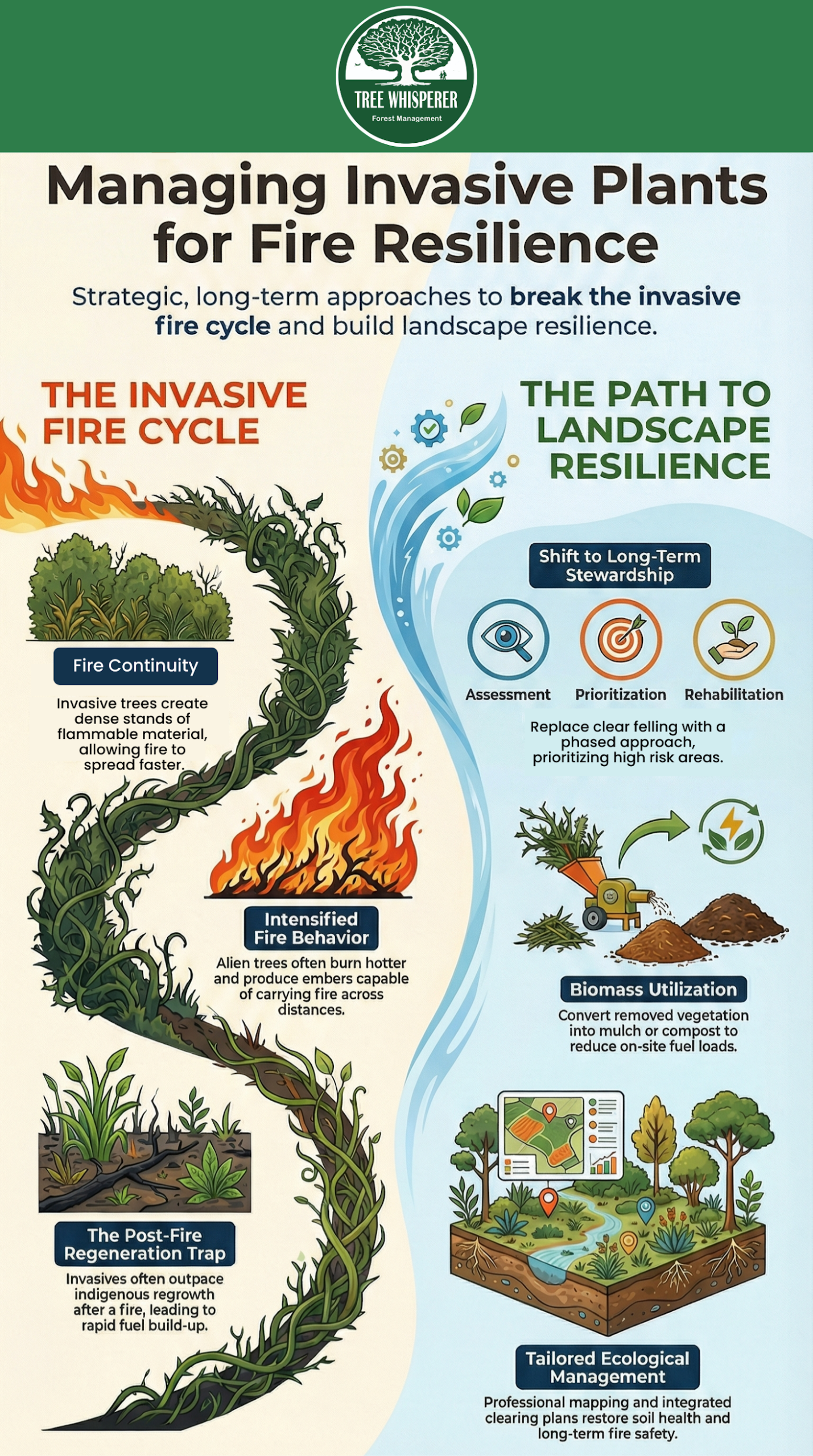
Clearing and processing invasive plants creates access, less fuel for fire and better water holding capacity. Most invasives pose a very high fire risk due to high fuel loads, dense areas, and high heat. Most of the invasive trees in South Africa also burn very well as firewood. Check out our Fire Risk Infographic.
Does clearing invasive alien plants help conserve water?
Yes, most invasive tree species add pressure on soil water levels. It can be multiple factors that play a role in this. Although Black wattle and pine trees dont necessarily use more water than individual indigenous trees, the pressure comes from the high density of trees, water permeability of the litter layer and the aggressive root systems that enter waterways. We have observed drastic changes in the water systems where invasive trees have been removed.
Do I need permission or a permit to remove invasive alien plants?
Depending on the region, some sensitive areas in South Africa require permits to disturb eco systems while other areas are advised to clear invasive species as the first protocol. This also depends on the clearing method, species, density and if it is done by professionals following the legislation or cowboys that break other environmental rules while clearing.
Can you clear invasive alien vegetation without damaging indigenous plants?
Yes. Different clearing method bring different results. Big tractors and trucks can cause damage while manual labour has much less of an impact on soil conditions.
At Tree Whisperer we tend to lean towards thinning over clear felling for this reason. This gives time for indigenous plant to re establish and cover the soil before the last clearing is done. This mitigates the stress of intensive disturbance on the soil.
Can you build a walking or hiking trail on my property?
Yes, this is what we love doing. It provides multiple benefits to land owners, animals also seem to enjoy the easy access in areas that were previously inaccessible. We also provide mapping of recorded routes to allow for clients to get to know the land safely.
How do you plan and design a nature trail?
First we meet with the client and scout the land to determine the scope of work. The next phase is to map a suggested path following contour lines where possible while still remaining on track. We like to chose possible waypoints along the route such as waterways, rock banks, big trees and viewpoints. We then create paths that suits the clients needs and follows the layout of the land.
How much does it cost to build a hiking or walking trail?
This is widely dependent on vegetation type, terrain layout, length of path(s) and added structural supports. We can provide prices to clients once these variables have been discussed with you.
Can you clear and maintain overgrown hiking or walking trails?
Yes, this is part of our service offering to existing and new clients. The process is easier if the path is still somewhat visible or marked. In some cases it might be more feasible to make a new path, instead of finding a 20 year old path.
How do you make a forest trail safe to use?
We generally design the path in the safest areas, avoiding steep inclines and risk areas where possible. Where needed, we remove obstacles and build supporting structures such as steps, railings, ropes and ladders. We then clearly map the created paths to mitigate the risk of getting lost in the forest. These route maps will be shared with you.
Can you create trails without damaging the natural environment?
Yes, all of our practices follow the lowest footprint possible. We selectively prune individual plants and carve the path around special and protected species. In specifically sensitive areas we avoid raking the paths and don’t do any soil work.
Can you create access to a river, dam or other natural area?
Yes, most of our paths are created as access to features such as waterways, big trees and recreational natural areas.
Can you identify and tag trees along a nature trail?
Yes, this is one of the many benefits that our clients get for using forest specialists. We use the general tree tags with species names, codes and interesting facts to help clients learn about trees while exploring their beauty.
How often do hiking trails need to be maintained?
This will be dependant on the vegetation type and how frequently the path is used. Most of our maintenance happens yearly or after storm damage in forested areas. We encourage clients to use the paths as much as possible to avoid excessive regrowth.
Can you create a nature trail for a lodge, estate or tourism property?
Yes. This adds value, as one path can be used by multiple people. Tourists flock to the Garden Route to appreciate its natural beauty, a path is the best gateway to spend time in nature.
What are the benefits of path creation?
Safety & fire access, ability to explore, visibility of the land from various angles, assessing risk areas and assessing invasive species pressure. It also facilitates an appreciation of natural areas by allowing access to rivers and valleys, exploring wild animal activities and habitats and selectively placing wildlife cameras on trails also increase the likelihood of spotting wildlife.
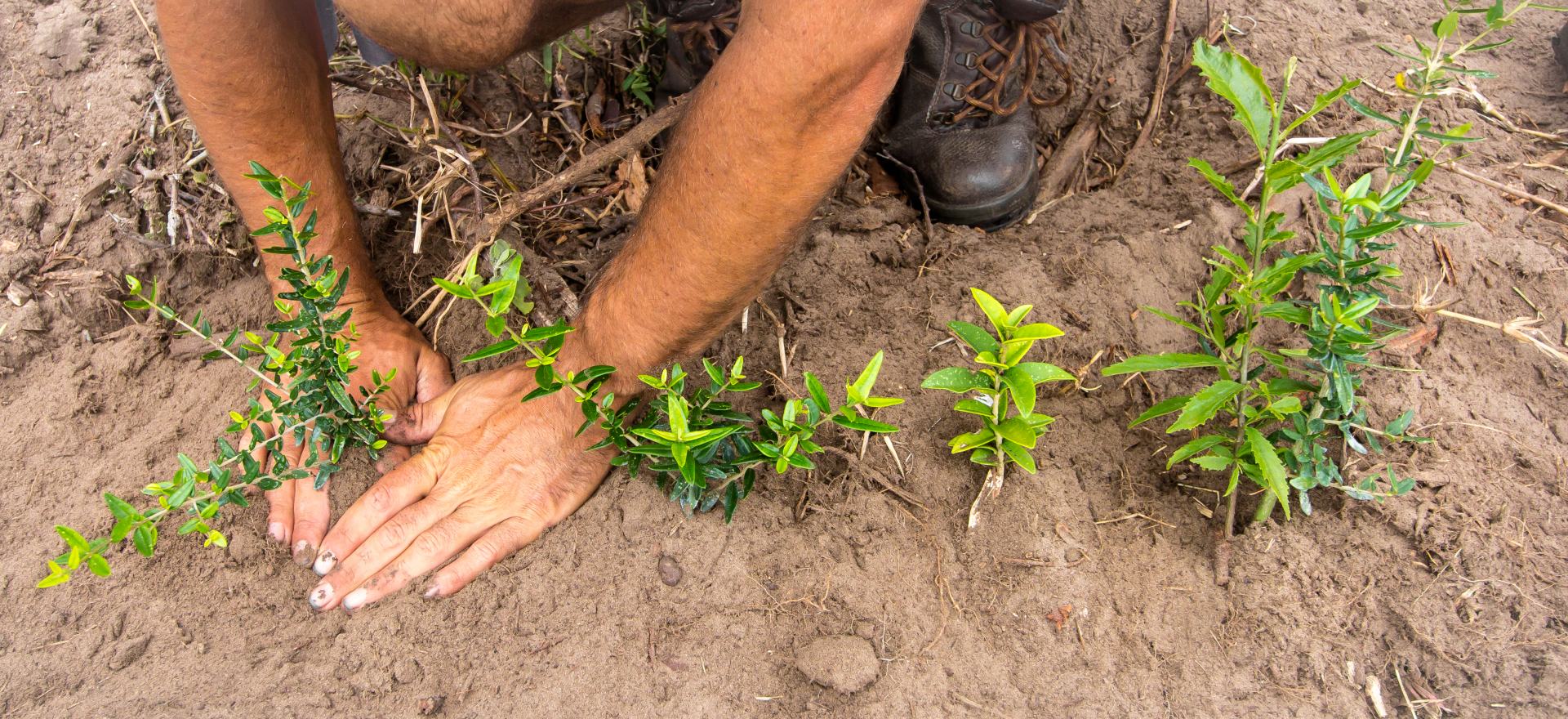
From formal management plans and large-scale alien clearing to recreational path networks and biomass processing, Tree Whisperer offers practical, ecologically sound solutions for Garden Route properties.